Union Intelligent CNC Industrial Park A&B, Hefei, China 231131
News
Is a 5-year-old laser cutting machine still good to use?
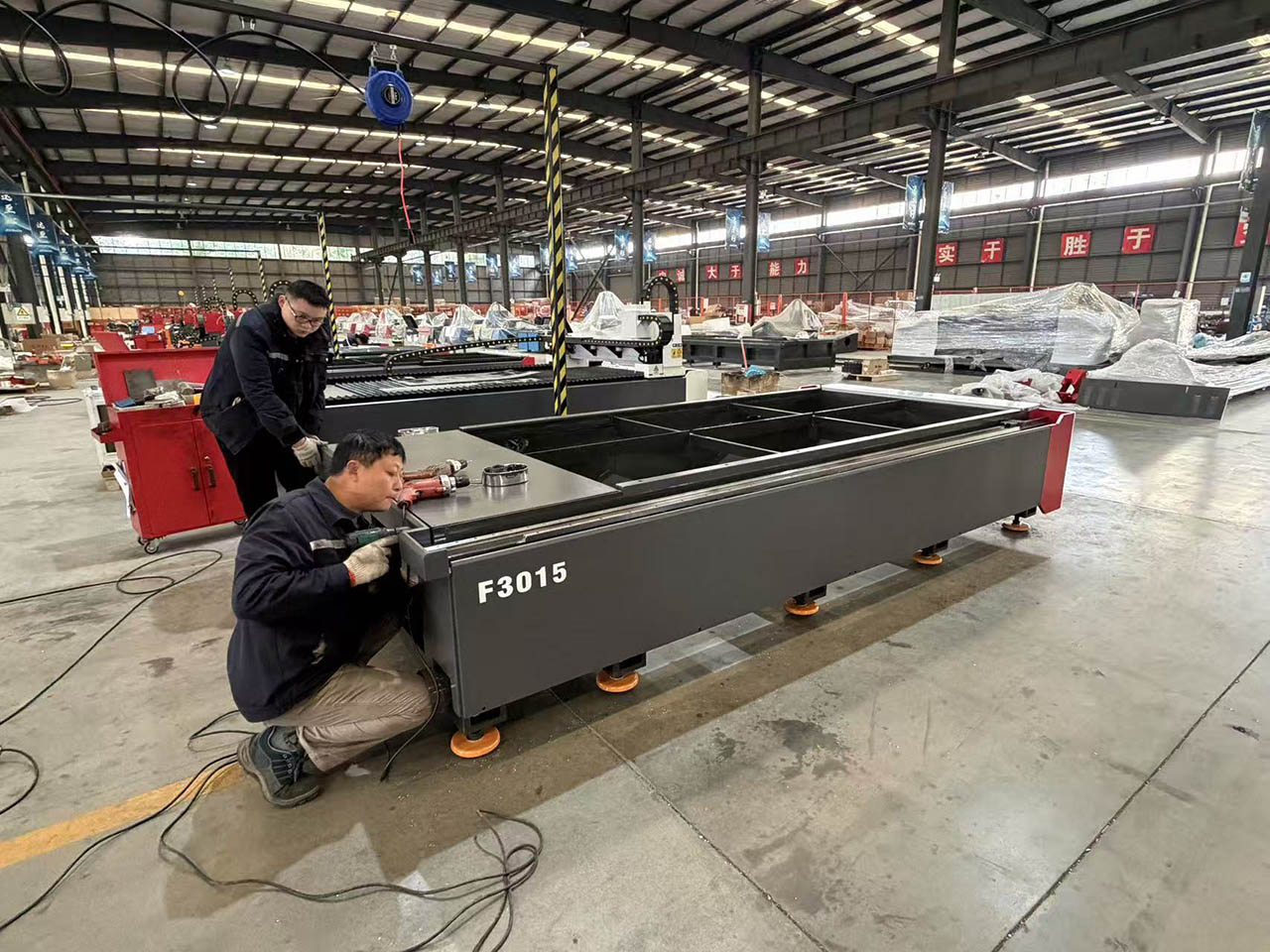
It has been 20 years since SUDA Laser’s first fiber laser cutting machine rolled off the production line. I still remember that our first machine was sold to a dealer in Turkey. Of course, both its configuration and performance are far behind today’s new products. But if it is properly maintained and used, a machine can still run stably for more than 10 years. So what are the most troublesome problems after a mainstream 6000 W fiber laser cutting machine has been running for 5 years? Apart from lenses and other consumables, the real trouble comes from hidden faults that gradually build up inside the equipment. These problems do not appear overnight. They get worse over time, and by the time you notice them, production efficiency and cutting quality are already affected. Below are some common long-term problems and how to deal with them. If you meet a problem you are not sure about, please contact SUDA staff and report it as soon as possible.
Follow us on Youtube for more machine maintaining guide: SUDA CNC& Laser
Transmission system accuracy loss
After 5 years of high-load operation, the guide rails, racks, ball screws and other transmission parts will wear to different degrees. Even with daily lubrication, accuracy will still drop gradually. The most obvious signs are larger cutting size deviation, round holes that are no longer round, and right angles that become obtuse. At this point, simply adjusting parameters will not solve the problem. You need to carry out a full inspection of the transmission system. Clean oil and metal dust from the guide rails and racks, check the tension of the timing belt, and tighten the connection bolts of the servo motors and reducers. For products with high accuracy requirements, it is recommended to perform geometric accuracy and positioning accuracy calibration once a year. If necessary, ask the manufacturer or a professional agency to carry out laser interferometer testing.
Aging cooling system causing chain problems
The chiller model most commonly used by SUDA Laser is the S&A CWFL-6000. After long use, the radiator can collect dust, the filter can become blocked, and the water pump performance can drop. These issues may cause higher water temperature and insufficient flow, which can then trigger high-temperature protection shutdown of the laser. A more hidden problem is that cooling water can deteriorate if it is not changed for a long time. Algae and bacteria may grow and block the water pipes. It is recommended to change the cooling water regularly and use distilled water or deionized water when possible. Clean the chiller filter and radiator on a regular basis. The workshop environment also matters. High temperature and heavy dust will accelerate cooling system aging. In winter, pay attention to antifreeze protection to avoid frozen or cracked water pipes.
More electrical system risks
As the equipment gets older, dust accumulation in the electrical cabinet, loose wiring terminals, and aging sensors will gradually appear. The most annoying issue is occasional alarms. Sometimes the machine runs normally, then suddenly stops with an error, and returns to normal after a restart. This kind of problem is difficult to trace, but it has a strong impact on production. After powering off, clean the control cabinet dust, check whether the fans are running normally, and tighten power cables and signal cables. For the capacitive height controller, ceramic ring, RF cable and other parts, check their connection status regularly. If the power supply voltage is unstable, it is recommended to use a voltage stabilizer and check whether the grounding resistance meets the equipment requirements. Also, please keep the factory clean and tidy. We have seen a lot of waste and garbage in some small workshop customers. This is not only unhygienic, but also affects the service life of the machine.
Laser power attenuation and beam path deviation
After 5 years of use, some power attenuation of the fiber laser is normal. But if the power drops too fast, it may be caused by contaminated fiber connectors, a dirty QBH protective window, or beam path deviation. You can first check whether the fiber connectors are clean and whether the fiber is bent or squeezed. If the power continues to drop significantly, please contact the manufacturer for power testing and beam path calibration. Do not disassemble the laser by yourself if there is an internal fault, to avoid causing more damage. At the same time, we recommend choosing a higher power level when purchasing the machine. This can extend its service life and also improve efficiency in daily production. Laser output power is adjustable, usually from 10% to 100%, so there is no need to worry about a sharp increase in electricity costs. ^_^
Control system and software compatibility issues
The control system from 5 years ago may already have an outdated software version. With operating system upgrades and hardware aging, compatibility problems may occur, such as slow operation, abnormal program execution, or parameter drift. It is recommended to back up important parameters regularly and upgrade the control system firmware when necessary. If the machine often cuts plates of different thicknesses and materials, parameter library management is also important, to avoid calling wrong cutting parameters and reducing cutting quality. The computers equipped with SUDA fiber laser cutting machines leave the factory with relatively high hardware configuration.
Cutting head follow system drift
After 5 years of operation, the capacitive follow system of the cutting head may drift. Ceramic ring wear, loose nozzles, or poor RF cable contact can cause unstable cutting head height, which then affects cutting quality. You can re-perform floating head calibration and centering, and check the connections of the RF cable and capacitive signal cable. If the plate itself is not flat, the follow system will also be under more pressure, so check plate flatness and clamping before processing.
Additional reminder: do not ignore consumables
One last point. Protective lenses, focusing lenses, nozzles, ceramic rings and other consumables are daily wear parts, but if they are not replaced in time after 5 years, they can make all the above problems worse. Replace them when needed, and do not try to save this small cost.
After 5 years of use, a fiber laser cutting machine really needs a systematic “deep check,” not just quick fixes. Check transmission accuracy, clean cooling pipes, inspect electrical wiring, test laser power, and back up control system parameters. If these issues are checked in advance, the equipment can continue to run stably for several more years. Instead of waiting for a breakdown, it is better to build a complete maintenance record and let the old machine continue to create value.




Leave a Comment